Downtown Rhinebeck Living: A Guide To Walkable Village Homes
February 19, 2026
February 19, 2026
Picture this: you grab coffee on East Market, browse the bookstore, then walk home down a tree‑lined street of historic houses. If you’re weighing a move to downtown Rhinebeck, you probably want an easy, connected lifestyle without losing Hudson Valley charm. In this guide, you’ll learn what everyday life looks like in the village core, what you can walk to, the architectural character, how the historic district works, current market signals, and a practical buyer checklist. Let’s dive in.
Downtown Rhinebeck offers a concentrated mix of cafés, independent boutiques, and restaurants near the junction of US‑9 and NY‑308. Local journalism highlights Rhinebeck as an amenity‑rich small town that attracts weekenders, second‑home buyers, and year‑round residents due to its historic main street and cultural density. You feel the village’s preservation mindset in the storefronts and streetscapes, which helps keep character front and center for everyday living. For a snapshot of the scene, explore this overview of Rhinebeck’s dining, shopping, and history from the Times Union’s Hudson Valley coverage.
The central few blocks are designed for pedestrians. You can walk to cafés, boutiques, the library, and some grocery options. According to a sample downtown address on Walk Score, the area rates as “Somewhat Walkable,” which means many errands can be handled on foot while a car remains useful for larger or out‑of‑center trips. If you live just beyond the main streets, you’ll likely still drive for some errands.
Rhinebeck’s core clusters dining, shopping, and services within a short stroll. The village’s historic main street anchors a lively calendar and a steady flow of local and visiting patrons. Nearby, the Old Rhinebeck Aerodrome in Red Hook is a unique aviation attraction with seasonal programs that adds another layer to the region’s character.
The Omega Institute’s Rhinebeck campus offers workshops, classes, and public events that many residents enjoy. Living in or near the village makes it simple to plug into Omega’s seasonal programming. The Dutchess County Fairgrounds host the annual Dutchess County Fair and other large events. It is a lifestyle plus if you enjoy festivals, though you should expect periodic traffic and parking impacts on peak days.
Northern Dutchess Hospital sits right in Rhinebeck, providing a local emergency department and community hospital services. Families in the village are served by the Rhinebeck Central School District, which operates elementary, middle, and high schools.
The closest intercity rail is the Rhinecliff (Rhinecliff–Kingston) Amtrak station a few miles west of the village. Typical travel times to New York City range from about 1.5 to 2 hours depending on the train. For commuter rail, many residents drive south to the Metro‑North station in Poughkeepsie. Service plans were adjusted in late 2025 and early 2026, so you should check current Amtrak and MTA schedules before you plan a commute.
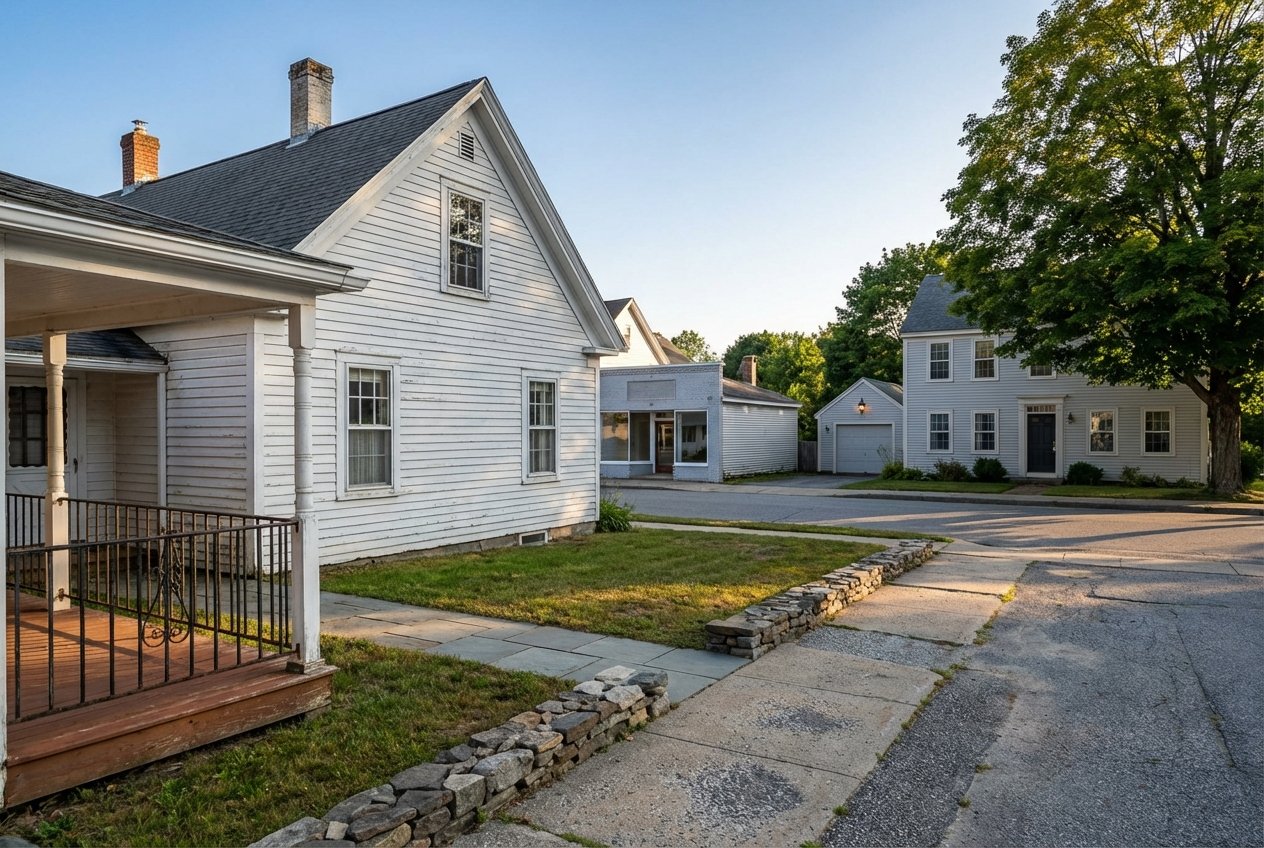
The village core showcases historic single‑family homes and small institutional buildings dating from the 18th through early 20th centuries. You’ll see Colonial, Greek Revival, Gothic Revival, and Late Victorian styles, along with Colonial Revival and Federal‑influenced homes. A standout Gothic Revival example is the Henry Delamater House by architect Alexander Jackson Davis, and many streets include contributing structures within the Village Historic District. Expect wood‑frame cottages, period Victorian houses with detailed trim, and the occasional carriage house or small multi‑unit building near the center.
The Village of Rhinebeck is a listed National Register historic district and maintains a local Historic District Overlay. If you plan exterior changes, demolition, or some forms of new construction within the overlay, additional review and permits may apply. Owners of contributing properties should plan ahead for design review and allow time for approvals. State and federal historic tax‑credit programs exist and can change over time, so you should verify current incentives and timelines with the New York State Historic Preservation Office and the village before you budget a project.
As of late 2025, zip‑level data for 12572 indicated median home prices in the high $700,000s with relatively tight inventory. Treat this as a directional signal and compare against current MLS data and recent village‑core comps. In practice, homes close to the center often trade at a premium on a per‑square‑foot basis due to proximity and character.
Choosing a home in or near downtown usually means you gain convenience and community energy. You also balance a few realistic tradeoffs:
Use this quick list to approach your due diligence with confidence:
If you want a walkable lifestyle with cafés, shops, and cultural programming close at hand, downtown Rhinebeck delivers. You get rich architectural character, a friendly main‑street rhythm, and lower day‑to‑day driving. If you prioritize large acreage, absolute quiet on event weekends, or a newer home without historic constraints, the village core may require tradeoffs.
When you are ready to explore available homes, get local guidance tailored to your goals. Backed by $335M+ in sales and 725+ transactions since 2020, The Garay‑Michaud Team can help you evaluate village‑core properties, navigate historic considerations, and negotiate the right outcome.
Stay up to date on the latest real estate trends.
To us, every relationship means so much more than a transaction. That's why our team strives to build strong, lasting relationships with each and every client that go beyond business. We understand what is at stake when finding your dream home, which is why we work closely with you every step of the way--making the otherwise overwhelming process completely stress-free.